
The case for a smarter, simpler approach to SuDS in the planning system
LHE policy paper, February 2026
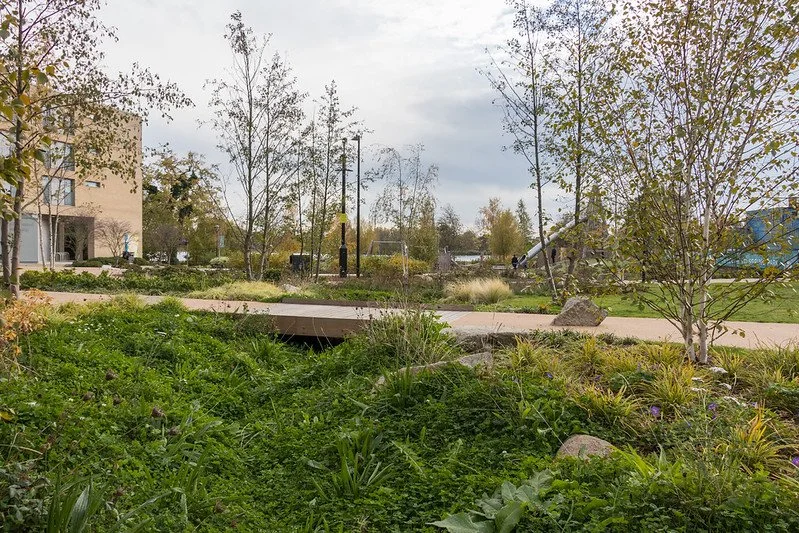
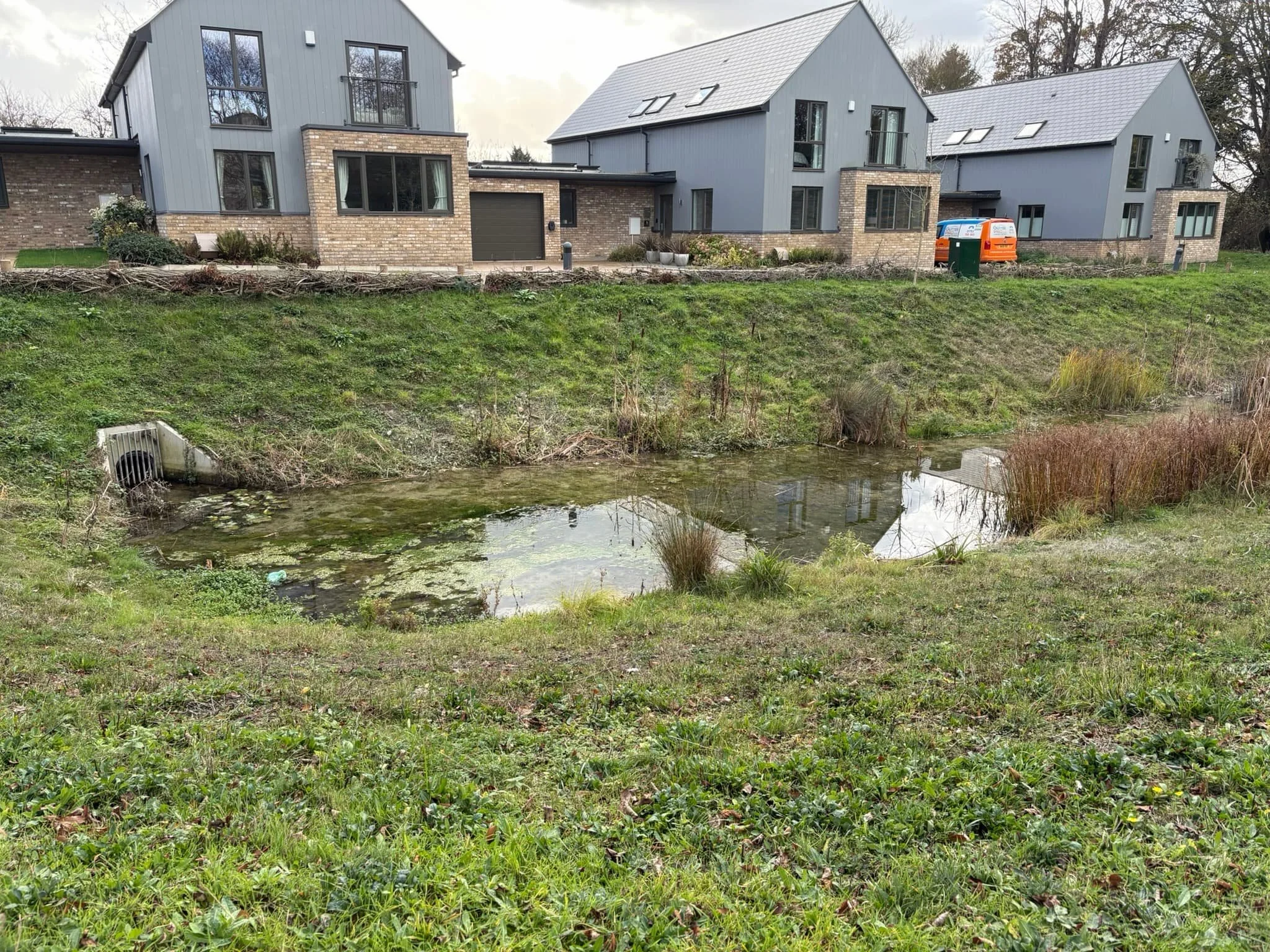
SuDS are vital for managing the risk of surface water flooding in a changing climate, and can deliver important community and environmental benefits alongside – enhancing biodiversity, controlling pollution and contributing to more pleasant places to live. Despite this, the SuDS being built in new developments are often too limited to deliver these benefits. Rather than seeking to intercept rainwater where it falls and channelling it naturally through the landscape, the SuDS we see in new developments are often ‘end of pipe’ approaches that simply divert water into a storage tank or detention basin.
This report explores the role of planning policy around SuDS, particularly the demand for hydraulic modelling, as a barrier to better SuDS designs. It argues that this excessively technical approach to SuDS in the planning system acts as a barrier to the delivery of well-designed, genuinely multifunctional SuDS, and ultimately undermines well-intentioned local and national policy that seeks to promote their use.
The report makes recommendations for an simpler approach to SuDS in planning that can better realise their full potential, from both surface water management and urban design perspectives. In particular, it advocates for changes to local planning policy to clarify that hydraulic modelling is no longer a requirement for demonstrating the compliance of SuDS designs with policy, replacing it instead with the simpler, more intuitive quick storage estimate (QSE) approach.
Image 2 - Lewis Hubbard Engineering